First Nations, Métis & Inuit Voices
Grade 11 University English, following the Ontario curriculum.
- 5 units
- 31 lessons
- 289 practice questions
- 266 flashcards
- 2 simulators
Units
Identities, Kinship and Representation
Who First Nations, Métis and Inuit peoples are and the words that name them accurately, how kinship and relationships with land and water shape identity in their writing, and how to take apart a stereotype and recognize the texts that replace it with something truer.
Oral Traditions and Storytelling
How First Nations, Métis and Inuit oral traditions carry history, law and relationships, how to listen to them on their own terms, how structure and figures carry a worldview, and how to speak respectfully and effectively yourself.
Reading Contemporary Indigenous Literature
How First Nations, Métis and Inuit writers use form and style to make meaning, how literature about residential schools centres survival and resilience, and how Indigenous futurism imagines what comes next.
- 1Text Forms in Contemporary Indigenous Literature
- 2Stylistic Elements: Humour, Language, Time, Dreams and Point of View
- 3Close Reading Indigenous Poetry
- 4Reading and Staging Indigenous Drama
- 5Reading Non-Fiction and Argument
- 6Residential Schools, Survival and Resilience in LiteratureInteractive
- 7Indigenous Futurism and Speculative Fiction
Sovereignty, Treaties and Media
What sovereignty, self-determination and treaties mean for First Nations, Métis and Inuit nations, how news media frame those stories, and how Indigenous creators and you yourself make media that tells them differently.
Writing for Reconciliation
Reading the national reports that name what happened and what must change, learning to write about communities responsibly, and building essays that are argued, evidenced, cited and revised with care.
- 1Truth and Reconciliation: The Reports and the CallsInteractive
- 2Meaningful Allyship in Reading, Writing and Speaking
- 3Writing for Change: Letters, Op-Eds and the Calls to Action
- 4Writing Creatively: Personal Narrative and Poetry
- 5Building a Literary or Persuasive Essay
- 6Research, Citation, Revision and Reflection
Simulators
Simulators for every course →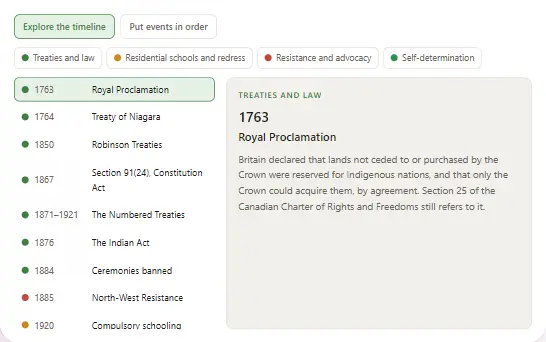
 NBE3U
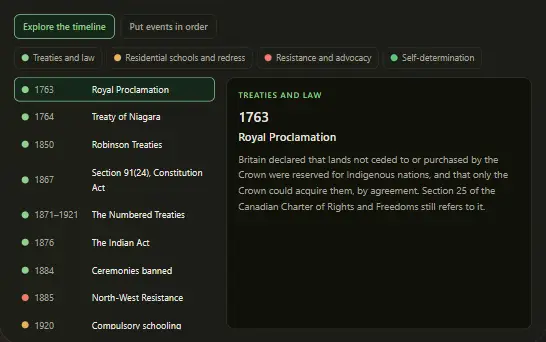
Explore the treaties, laws, court decisions and movements that contemporary First Nations, Métis and Inuit texts refer to, then test yourself by putting events in order.
 NBE3U
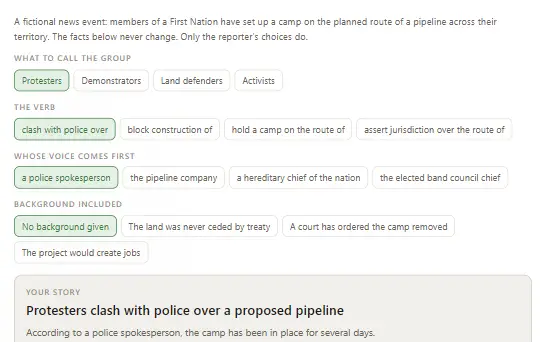
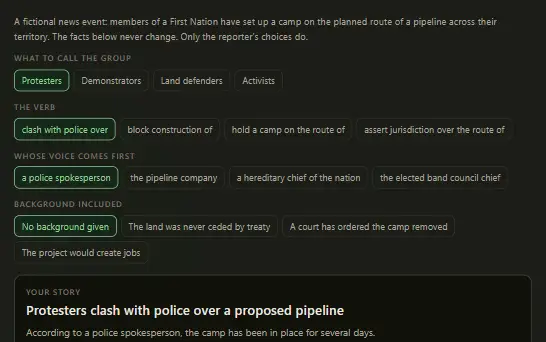
Keep the facts of a fictional news story fixed and change only the words, the first voice and the background, to see how each choice shapes what readers conclude.