A pilot flying from Toronto to Ottawa does not simply point the nose at Ottawa. The air itself is moving, and the plane is carried along with it, so a plane pointed at Ottawa in a crosswind would drift off course. In the same way, a canoe aimed straight across a river lands downstream, and a crate pulled by two ropes moves in neither rope's direction. In each case the real motion is the VECTOR SUM of everything acting, and the tools from the last three lessons let you compute it.
Resultants and equilibrants
When several forces act on one object, their vector sum is the RESULTANT, the single force that would have the same effect. The force that exactly cancels the resultant is the EQUILIBRANT: same magnitude, opposite direction, . An object with zero resultant force is in equilibrium (it stays at rest or keeps moving at constant velocity), which is why engineers check that the forces at every joint of a structure add to .
- Convert every direction to a standard angle (or measure every angle from the same axis).
- Resolve each vector into components: , .
- Add all the components, then add all the components.
- Find the resultant's magnitude with and its angle with , adjusting for the quadrant.
- Convert the angle back into the form the question uses (bearing or quadrant bearing) and state magnitude AND direction.
A plane in a crosswind
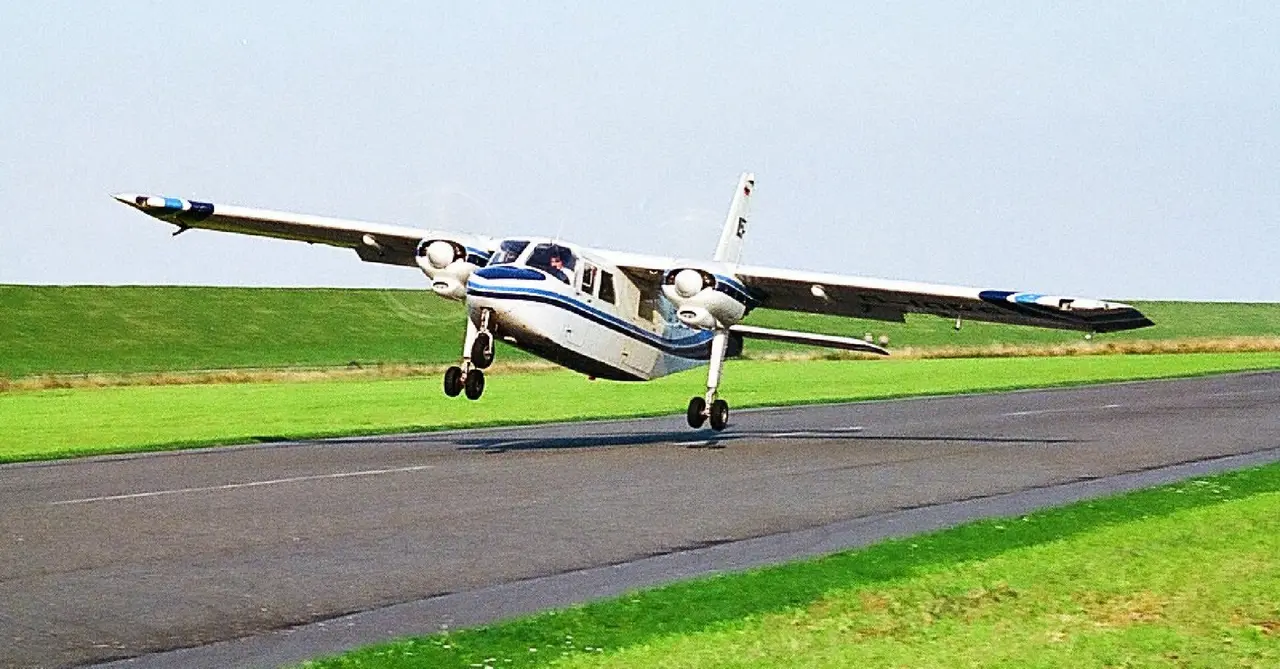
Here is the classic problem. A plane has a heading of N E and an air speed of km/h. The wind blows from the south at km/h. What are the ground speed and the actual direction of travel? Put east along and north along . A heading of N E is from the -axis, so the east component uses sine and the north component uses cosine.
So the ground speed is km/h and the track is east of north, that is, N E. The wind raises the speed over the ground by about km/h, and because it pushes straight north it pulls the track about closer to north than the heading. The triangle method agrees: the angle inside the triangle between the air and wind vectors is , and the cosine law gives whose square root is about .
A boat crossing a current
A river current only carries a boat sideways, so the time to cross depends ONLY on the boat's velocity component straight across. Aim straight across and you cross fastest but land downstream. To land directly opposite, aim partly upstream so that the upstream component of the boat's velocity cancels the current exactly; this needs which is only possible when the boat is faster than the current.