Financial Accounting Principles
Grade 12 University/College Preparation, following the Ontario curriculum.
- 4 units
- 30 lessons
- 278 practice questions
- 233 flashcards
- 3 simulators
Units
The Accounting Cycle
Revisit the full accounting cycle at a Grade 12 level: the GAAP framework behind every entry, the bodies that set and enforce the rules, merchandising in a computerized system, adjusting, closing and reversing entries, and the ethical and technological issues reshaping the profession.
Accounting for Assets
Receivables and bad debts, notes, inventory costing and control, and how capital and intangible assets are recorded, amortized and disposed of.
- 1Credit Terms, Card Sales and ReceivablesInteractive
- 2Estimating Bad Debts: The Allowance Method
- 3Notes Receivable and Interest
- 4Inventory Costing MethodsInteractive
- 5Inventory Errors, Technology and Internal Control
- 6Capital Expenditures and the Cost of Capital Assets
- 7Amortization MethodsInteractive
- 8Revisions, Disposals and DepletionInteractive
- 9Intangible Assets and Goodwill
Partnerships and Corporations
Forming, sharing income in, changing and closing a partnership, then issuing shares, paying dividends and reporting for a corporation.
- 1Partnerships: Types and Formation
- 2Dividing Partnership IncomeInteractive
- 3Admitting and Withdrawing Partners
- 4Liquidation and the Statement of Partners' Equity
- 5Corporations and Classes of Shares
- 6Issuing, Subscribing and Repurchasing Shares
- 7Cash Dividends and Preferred Shareholders
- 8Stock Dividends, Stock Splits and Shareholders' Equity
- 9Financial Statements for a Corporation
Financial Analysis and Decision Making
Learn how businesses raise money, how to read an annual report, and how horizontal and vertical analysis, financial ratios and the cash flow statement reveal a company's liquidity, solvency and profitability.
Simulators
Simulators for every course →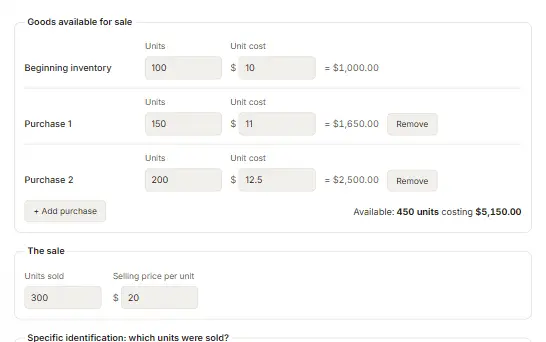
 BAT4M
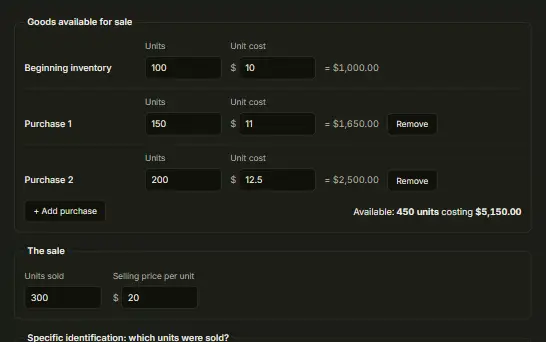
Edit the cost layers and the sale, then compare cost of goods sold, ending inventory and gross profit under FIFO, weighted average and specific identification.
 BAT4M
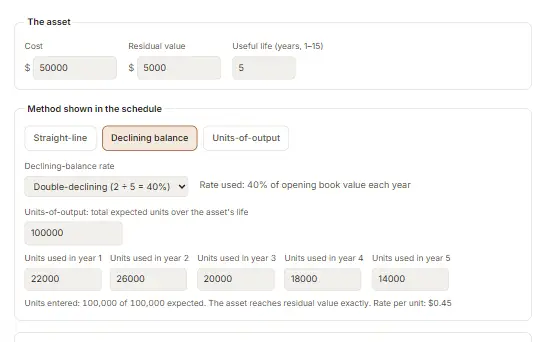
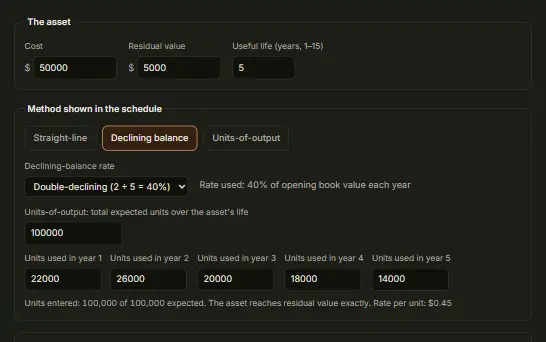
Build straight-line, declining-balance and units-of-output schedules, compare book value over time, and dispose of the asset to see the gain or loss.
 BAT4M
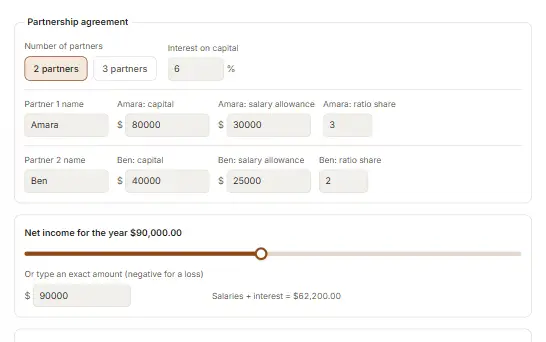
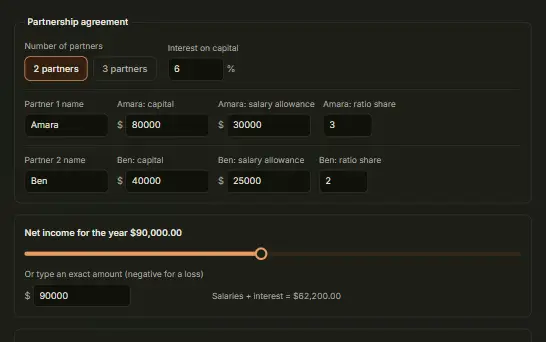
Divide net income or a net loss among two or three partners with salary allowances, interest on capital and a ratio, and watch a negative remainder get shared out.