Biology
Grade 12 University Preparation, following the Ontario curriculum.
- 5 units
- 26 lessons
- 283 practice questions
- 249 flashcards
- 4 simulators
Units
Biochemistry
The chemistry that makes life possible: how bonds, water and functional groups shape biological molecules, how cells build and break carbohydrates, lipids, proteins and nucleic acids, how enzymes speed up and regulate reactions, and how membranes control what enters and leaves a cell.
Metabolic Processes
How cells obey the laws of thermodynamics while capturing, storing and spending energy: ATP and redox carriers, aerobic respiration and fermentation, photosynthesis, and how people put microbial and human metabolism to work.
Molecular Genetics
How DNA was identified as the genetic material, how it is built, copied and read into proteins, how genes are switched on and off or changed by mutation, and how genetic technologies work and raise legal and ethical questions in Canada.
Homeostasis
How the nervous, endocrine and excretory systems use feedback loops to hold body temperature, blood glucose, pH, water and salt within narrow limits, and what happens when drugs, disease or the environment push those systems off balance.
Population Dynamics
How ecologists measure and model populations, why growth speeds up and then levels off, how species interactions ripple through whole communities, and what the growth of the human population means for Earth's capacity to support it.
Simulators
Simulators for every course →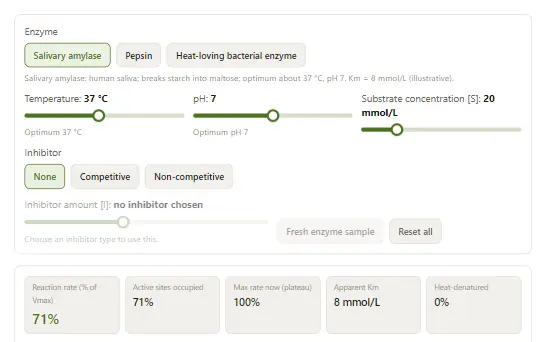
 SBI4U
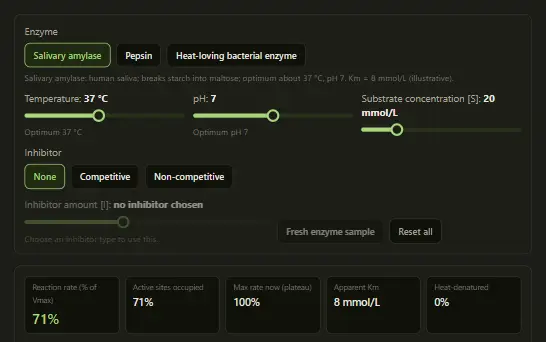
Change temperature, pH and substrate concentration, add a competitive or non-competitive inhibitor, and watch the reaction rate curve respond.
 SBI4U
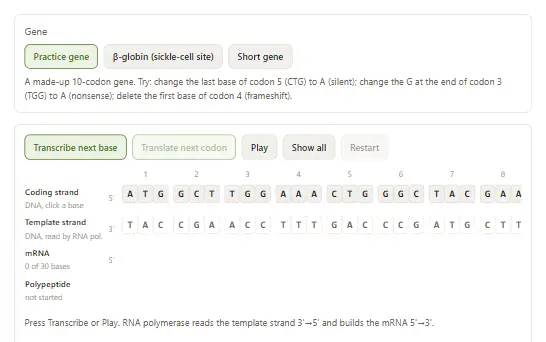
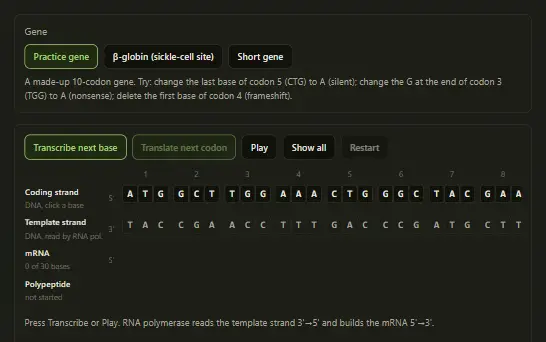
Step a DNA template through transcription and translation, then introduce point mutations and see whether they are silent, missense, nonsense or frameshift.
 SBI4U
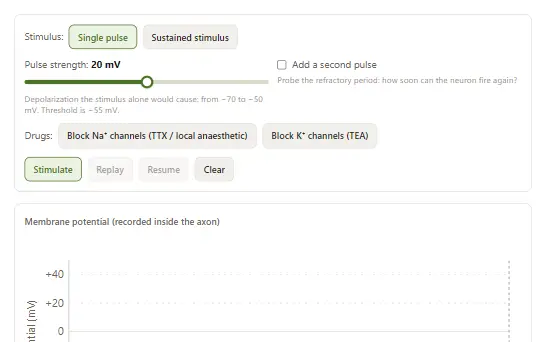
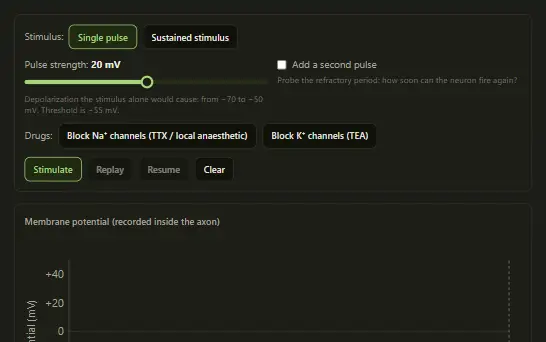
Stimulate a neuron above and below threshold, fire during the refractory period, and follow the Na+ and K+ channels behind each phase of the spike.
 SBI4U
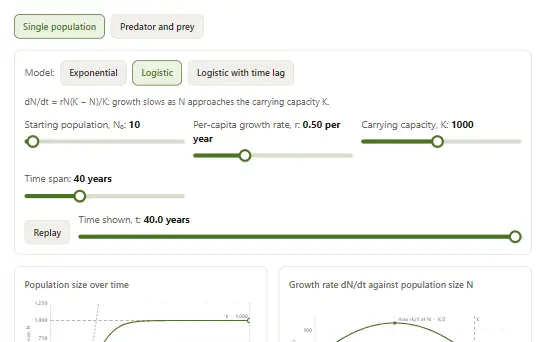
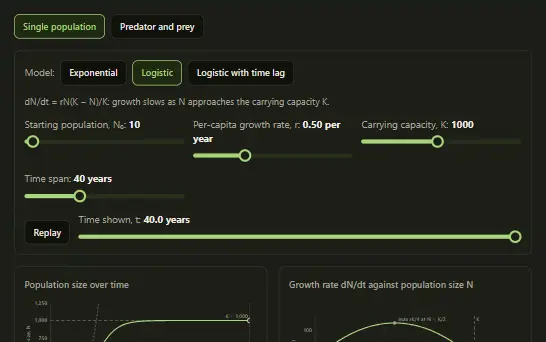
Compare exponential and logistic growth with your own r and K, then switch to predator and prey and watch their populations cycle out of phase.