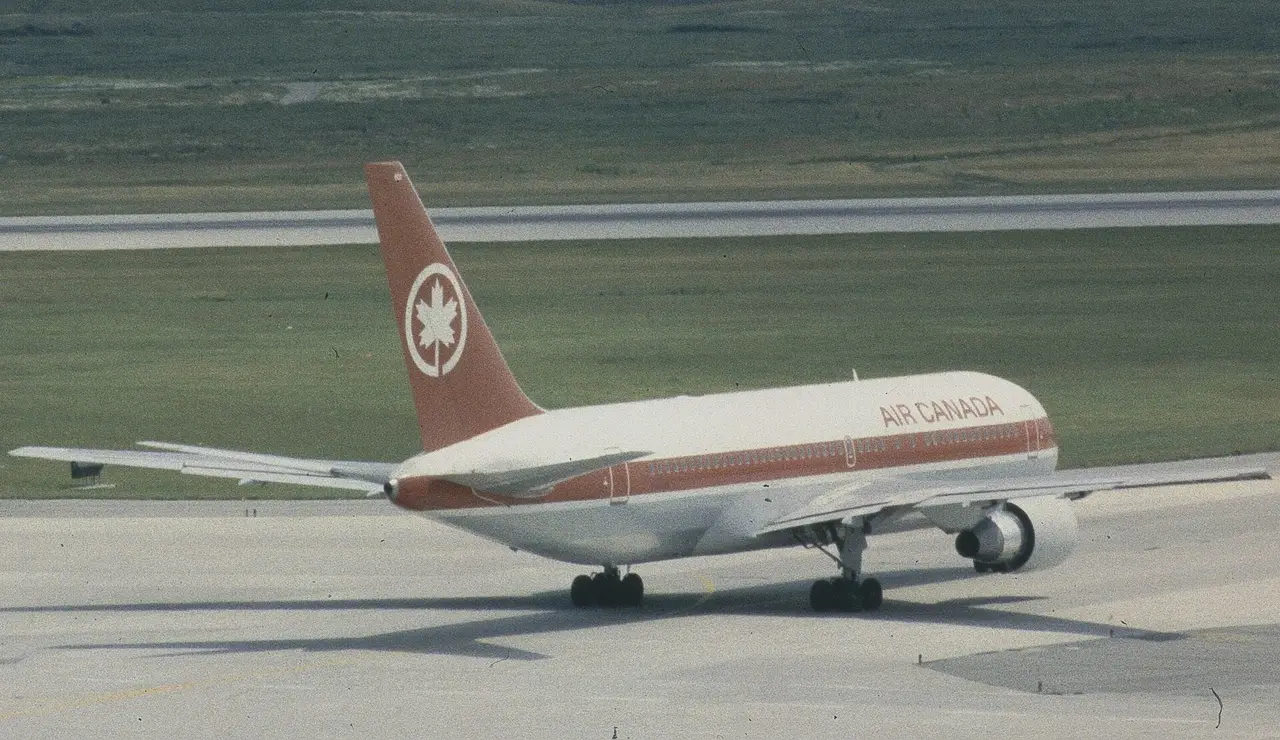
Canada officially measures in metric: road signs are in km/h, milk comes in litres and the weather is in degrees Celsius. Yet you probably give your height in feet and inches, a hardware store sells "2 by 4" lumber measured in inches, and a recipe from a relative might call for cups and pounds. Moving between units is a real skill, and getting it wrong has real costs. In 1983 a Canadian airliner ran out of fuel in mid-air because its fuel was calculated with a pound-based number where a kilogram-based one was needed. In this lesson you will learn how the metric system is built, how to convert any metric unit in your head, why square and cubic units need extra care, and how to convert between metric and imperial units exactly.
How the metric system is built
The metric system has one base unit for each kind of quantity: the metre (m) for length, the gram (g) for mass and the litre (L) for capacity. (These are the everyday base units; in the official scientific system, SI, the base unit of mass is the kilogram.) Most other metric units are a base unit with a prefix that multiplies it by a power of 10. Kilo means 1000, so 1 kilometre metres. Centi means one hundredth, so 1 centimetre m and 100 cm m. Because every prefix is a power of 10, converting is just multiplying or dividing by 10, 100, 1000 and so on, which moves the decimal point. Two more prefixes are common in science and technology: mega (M, one million) and micro (µ, one millionth).
| Prefix | Symbol | Means | Length example |
|---|---|---|---|
| kilo | k | 1000 | 1 km = 1000 m |
| hecto | h | 100 | 1 hm = 100 m |
| deca | da | 10 | 1 dam = 10 m |
| (base unit) | m, g, L | 1 | 1 m |
| deci | d | 0.1 | 1 dm = 0.1 m |
| centi | c | 0.01 | 1 cm = 0.01 m |
| milli | m | 0.001 | 1 mm = 0.001 m |
To convert, count the steps on the staircase. Going down to a smaller unit, multiply by 10 for each step, because it takes more small units to cover the same amount. Going up to a larger unit, divide by 10 for each step. From km to m is 3 steps down, so . From mg to g is 3 steps up, so . A method that works for every conversion, metric or not, is to multiply by a conversion factor: a fraction whose top and bottom are equal amounts, so it equals 1. Choose the fraction so the unit you want to get rid of cancels.
Square and cubic units
Since , it is tempting to think . It is not. A square that is 1 m on each side is 100 cm on each side, so its area is . The length factor gets used once for each dimension: squared for area, cubed for volume. So Capacity and volume are linked: , so and Land is often measured in hectares: , the area of a square 100 m on each side.
| Length link | Area link | Volume link |
|---|---|---|
| 1 cm = 10 mm | 1 cm = 100 mm | 1 cm = 1000 mm |
| 1 m = 100 cm | 1 m = 10 000 cm | 1 m = 1 000 000 cm |
| 1 km = 1000 m | 1 km = 1 000 000 m | 1 km = 1 000 000 000 m |
| 1 ft = 12 in | 1 ft = 144 in | 1 ft = 1728 in |
Metric and imperial
The imperial units still common in Canada (inches, feet, miles, pounds, the same lengths and masses the United States uses) are linked to metric by exact definitions. Since an international agreement in 1959, the inch has been defined as exactly 2.54 cm, and the pound as exactly 0.45359237 kg. Everything else follows: , , and , all exact. Going the other way gives numbers that never end, so they are rounded: and . To keep answers accurate, use the exact factors and round only once, at the end.
Where units come from
Many old units were based on the human body or on daily life. In ancient Egypt, the cubit was based on the length of the forearm; the royal cubit used in building was about 52 cm (estimates vary slightly). The foot and the inch also began as body measures, which is why they varied from place to place. In the 1790s, during the French Revolution, scientists in France designed the metric system so that units would be the same everywhere and linked by powers of 10. They defined the metre as one ten-millionth of the distance from the North Pole to the equator. Today the metre is defined by the speed of light: the distance light travels in a vacuum in of a second. Canada began switching to metric in the 1970s. Some cultures still use traditional units every day: in Japan, the size of a room is often given in tatami mats, the woven floor mats traditionally used there. A mat is roughly 1.8 m by 0.9 m, though the exact size depends on the region, so a "6-mat room" is about .