How tall is the flagpole in front of the school? Stand m from its base on level ground and use a clinometer (a simple angle-measuring tool, or a phone app) to sight the top. Suppose it reads above the horizontal. Your line of sight, a horizontal line at eye level, and the flagpole make a right triangle. The horizontal side ( m) is adjacent to the angle and the part of the pole above your eyes is opposite, so that part is m. Your eyes are m above the ground, so the whole pole is m. Surveyors, pilots, ship navigators and builders solve problems like this every day. The tools are the ones you already have, SOH CAH TOA and the Pythagorean theorem; the skill this lesson adds is turning a situation into a correctly labelled right triangle.
Angles of elevation and depression
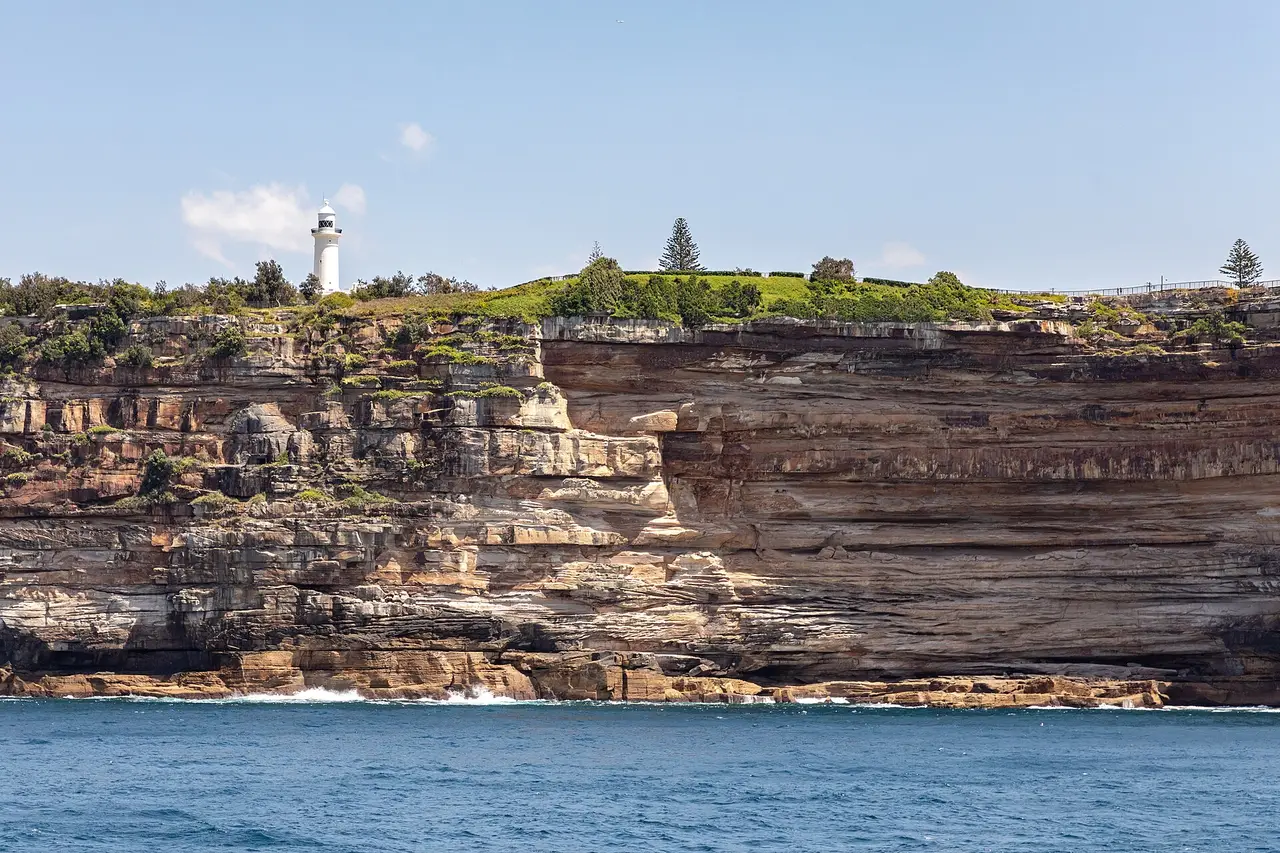
The line of sight is the straight line from your eye to the object you are looking at. When you look up at something, the angle between the horizontal and your line of sight is the angle of elevation. When you look down at something, the angle between the horizontal and your line of sight is the angle of depression. Both are measured from the horizontal, not from a wall or a vertical pole. Now picture a person on top of a cliff looking down at a boat, while someone in the boat looks up at the cliff top. They share one line of sight. The horizontal line at the cliff top and the horizontal water surface are parallel, and the line of sight crosses both, so the angle of depression from the top equals the angle of elevation from the boat: they are alternate angles between parallel lines. That fact lets you place the given angle inside the right triangle, where SOH CAH TOA can use it.
Solving a right triangle
To solve a triangle means to find every unknown side and angle. A right triangle can be solved when you know either two sides, or one side and one acute angle. (Knowing only the three angles is not enough: similar triangles of every size share them.) Sketch the triangle, mark what is given, then work one unknown at a time, always choosing a tool that uses given values where possible so that an early slip does not spread. The Pythagorean theorem, where is the hypotenuse, finds a third side from two sides without needing any angle. Use the unrounded values when one result feeds the next, and finish with a check: the Pythagorean theorem should hold for your three sides, and the two acute angles should add to .
| You know | You want | Use |
|---|---|---|
| Two sides | The third side | Pythagorean theorem |
| One side and one acute angle | Another side | The sine, cosine or tangent ratio that links the two sides |
| Two sides | An acute angle | An inverse ratio: , or |
| One acute angle | The other acute angle | Subtract from |
Surveying, navigation and building
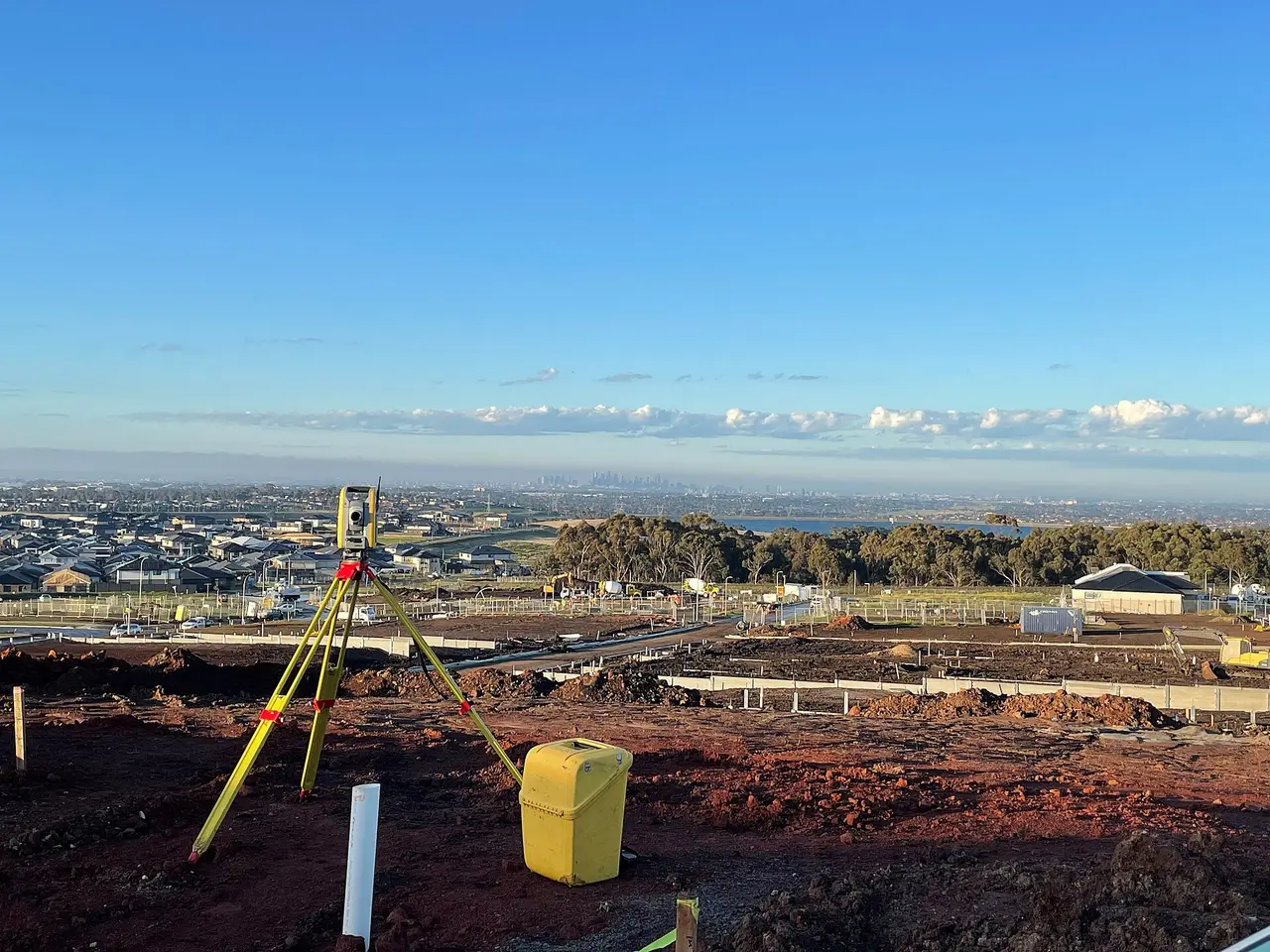
Navigation: a ship sails km east and then km north. The two legs of the trip meet at a right angle, so its straight-line distance from port is km. Its direction from port is the angle north of east with , so north of east. Building: a common ladder-safety guideline is to set the base out m from the wall for every m of height up the wall. Then , so the ladder makes an angle of with the ground; the guideline is often quoted as "about ". A m ladder at has its foot m from the wall and reaches m up it. Surveying: across a canyon or river, a surveyor marks a baseline on her own side, measures its length and an angle, and calculates the distance she cannot walk.
Problems with two right triangles
Some situations hide two right triangles that share a side. From the roof of a building m tall, the angle of elevation to the top of a taller building across the street is and the angle of depression to its base is . A horizontal line from the roof splits the taller building into a lower part ( m, the same height as the roof) and an upper part. The lower triangle has a known side ( m) and angle (), so solve it first for the shared horizontal distance . Then the upper triangle has a known side () and angle (), which gives the upper part. Keep unrounded in your calculator while you move to the second triangle.
When neither triangle can be solved alone, the shared unknowns lead to a system of equations. Two observers on the same side of a tower measure angles of elevation and to its top, and stand m apart. Neither triangle has a known side, but each gives an equation for the tower's height in terms of the unknown distance from the nearer observer to the base: and . Setting the two expressions equal and solving gives , and then (worked example 4 shows every step).