Financial Accounting
Grade 11 Fundamentals, following the Ontario curriculum.
- 4 units
- 42 lessons
- 290 practice questions
- 277 flashcards
- 3 simulators
Units
The World of Accounting
What accounting is, who uses it, how businesses are organized, the rules accountants follow, and the balance sheet that ties it all together.
The Accounting Cycle: Service Business
Follow one small business, Trillium Bike Repair, through a full fiscal year — from the first debit and credit to the post-closing trial balance.
- 1The Account, Debits, and Credits
- 2Double-Entry AccountingInteractive
- 3The Trial Balance
- 4The Income Statement
- 5Drawings and the Statement of Owner's Equity
- 6The General JournalInteractive
- 7Posting to the Ledger
- 8Source Documents
- 9The Work Sheet
- 10Adjusting Entries
- 11Depreciation
- 12Classified Financial Statements
- 13Closing the Books
The Accounting Cycle: Merchandising Business
How a business that buys and resells goods tracks purchases, sales, sales tax, subsidiary ledgers, cash control, and the merchandising financial statements.
- 1Service vs. Merchandising vs. Manufacturing
- 2The Purchases Account
- 3The Sales Account
- 4Periodic vs. Perpetual Inventory
- 5Cost of Goods Sold & Gross Profit
- 6GST, HST, and PSTInteractive
- 7Subsidiary Ledgers & Control Accounts
- 8The Special Journal SystemInteractive
- 9Cash Control & Petty Cash
- 10Bank Reconciliation
- 11Bad Debts & the Allowance Method
- 12Accruals & Deferrals
- 13Merchandising Financial Statements
Financial Analysis & Decision Making
Turning financial statements into decisions: cash flow, budgeting, ratio analysis, payroll, and the way corporations and manufacturers organize their books.
Simulators
Simulators for every course →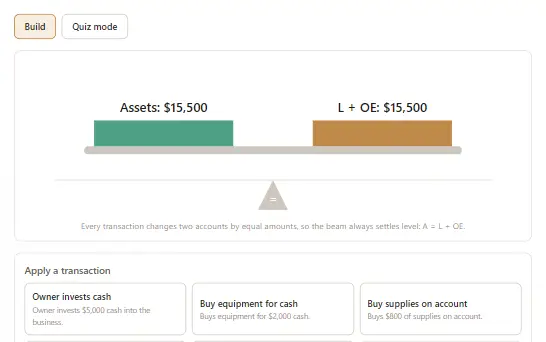
 BAF3M
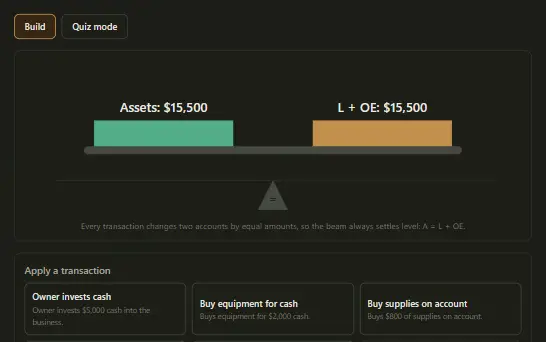
Apply real transactions and watch A = L + OE refuse to break.
 BAF3M
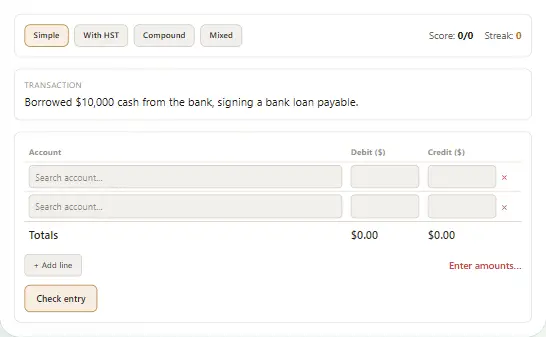
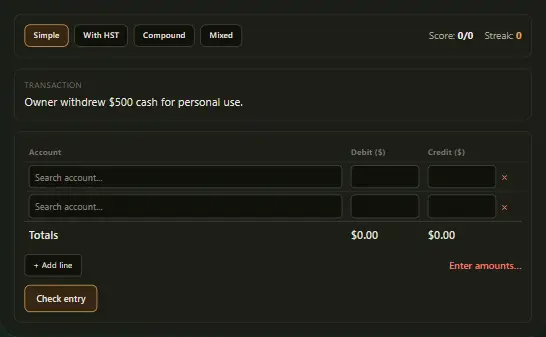
Read a transaction, pick the accounts and sides, get marked instantly.
 BAF3M
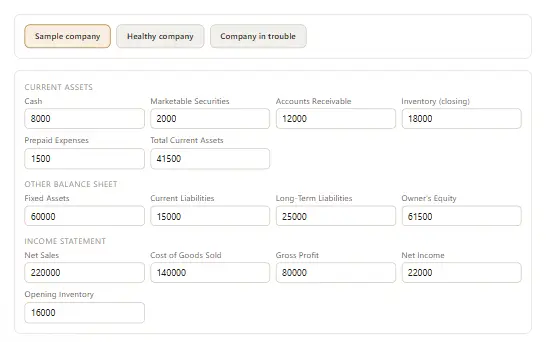
Enter statement figures and get every ratio with its formula and interpretation.